Class Trial Three-Sacrifice Requirement
The Legend of William OhThe Class Trial Three-Sacrifice Requirement is the central access rule for The Trial, requiring an Aspirant to gather three Sacrifices before the Door opens. It turns class selection into an exercise in timing, resource management, and risk: candidates must decide not only whether they can survive the Trial, but whether the materials they possess are worth consuming and whether their resulting Class will justify the cost.
Definition and Normal Operation
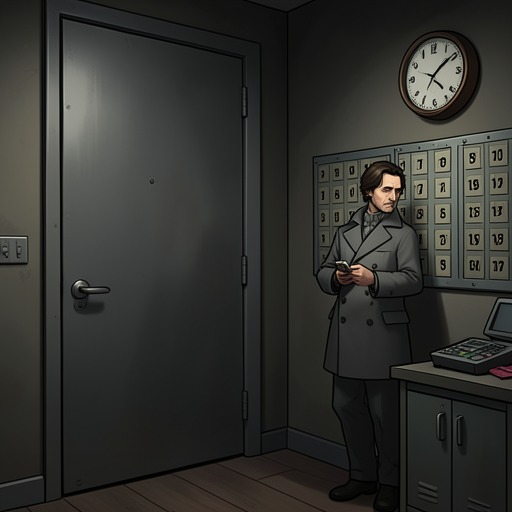
The rule is ordinarily self-enforcing. The Trial presents itself only after a person has acquired all the Sacrifices needed, and the Door to The Trial normally opens when the candidate has three Sacrifices in their possession. When this condition is met, a pale yellow sliver of light opens in empty air and forms a glowing archway, an unmistakable manifestation of the system's recognition that the candidate is ready.
The requirement is therefore both a threshold and a safeguard against premature entry. Gertrude explains to William Oh that he should not leap into The Class Trial with the first three Sacrifices he can obtain. She urges him to use the entire summer to hunt, examine the market, sell unwanted Sacrifices, buy gear, and wait for another Aspirant to pass along something better. The rule does not impose a time limit: William Oh does not have to take his Class that year, and Gertrude's advice is to begin The Trial only when he is certain he has what he needs.
The Class Creation Room Exception
The apparent simplicity of the rule conceals a severe failure condition. The Class Creation Room is effectively sealed against ordinary escape; its walls resist every force an Aspirant can bring against them, including Relic weapons given to lower-level candidates by high-level Climbers. If an Aspirant enters without the required materials, bad luck can turn the room into a place of prolonged dehydration and starvation.
The only way to open the Door to The Trial from that predicament is still to offer three Sacrifices. Yet William Oh reaches the Class Creation Room with only two qualifying materials. He has an Uru Drake scale, which he had bound tightly to his midsection beneath his bandages, but he lacks the complete set. The rule thus changes from a routine condition into a trap: once inside, possession of three Sacrifices is not merely helpful but the sole practical route to survival.
William Oh's Improvised Attempt
Unable to meet the requirement, William Oh lays out what he has and searches for a substitute. He places a thumb-sized piece of pemmican on one of the Class Trial Altars, attempting to make an ordinary food ration serve as a Sacrifice. The system accepts the offering as an expenditure, but not as a successful class-generating component. A beam of light descends onto the pemmican, grows brighter, and then flashes until nothing remains; the system reports that the Sacrifice is suboptimal and that the attempt to generate a Class Seed has failed.
This failed offering demonstrates that the rule is not satisfied by any three disposable objects. A candidate must possess Sacrifices of sufficient validity or quality for the system to use them. The offering is consumed even though it produces no Class Seed, leaving William Oh with fewer resources and no closer to escape. The requirement therefore has a punitive economic dimension: an unsuccessful workaround does not preserve the material for a second attempt.
The next altar interaction reveals a further complication. One Sacrifice produces two results associated with Earth and Mobility, and the beam of light remains above the Altar to mark that it has been used while the two outputs remain on the sides. The system can therefore distinguish between the number of offerings and the number or nature of the results generated from them. The three-Sacrifice requirement concerns the materials needed to activate The Trial, but activation can lead to more complex class-generation consequences than a simple one-for-one exchange.
Choice, Cost, and Systemic Consequences
Once the process reaches the point of choosing Primary Abilities, the Sacrifice requirement has done more than open a doorway. It has shaped the Class that William Oh is able to investigate and the decisions he must make afterward. The system asks him to choose his Primary Abilities, while he pauses to study the meaning of the Resourceful Climber Class before committing himself. Because the Sacrifices determine access to this stage, preparation directly affects the range of possible futures available to the candidate.
The rule also explains why the Uru Drake scale carries such dangerous value. William Oh recognizes that possessing it without the strength to protect it made him a target; without it, he might have remained an unnoticed nobody rather than becoming a person worth robbing. The Sacrifice is therefore simultaneously a key to advancement and a liability in the wider climbing economy. Its value attracts conflict before it can deliver its intended benefit.
The broader quest system reinforces the same logic of staged preparation. After the system issues an Establishing Quest, William Oh eventually receives a new quest to ascend to the 2nd Floor, reaches level five on his first Establishing Quest, and is ranked 1053rd among that year's Aspirants. These later advances do not erase the original constraint. Instead, they show how the three-Sacrifice rule is the first of several system gates through which advancement is converted into a sequence of controlled thresholds.
Narrative and Thematic Significance
The requirement gives The Trial a distinctive tension between haste and prudence. Gertrude's warning favors patience, trade, equipment, and informed selection, but the Class Creation Room exposes what happens when preparation is incomplete. The same rule that normally marks a candidate's readiness can become an enclosure when the candidate has misjudged the threshold. In that contrast, the system resembles both a game interface and an impersonal authority: its conditions are explicit, yet its designers have left room for catastrophic human error.
William Oh's experience makes the rule a lesson in scarcity rather than a simple piece of world-building. Sacrifices can be hunted, sold, traded, consumed, or withheld; each action changes the candidate's prospects. The pemmican episode makes the danger concrete by showing an offering vanish without yielding a Class Seed, while the Uru Drake scale demonstrates how a successful component can expose its bearer to violence. The requirement ultimately defines advancement as a bargain: entry into The Trial is possible only through resources that may be difficult to obtain, costly to lose, and dangerous to possess.